June 26, 2018

 Please join us in congratulating Pramod Sah who was recently awarded the Li Tze Fong Memorial Fellowship from UBC.
Congratulations, Pramod!
Please join us in congratulating Pramod Sah who was recently awarded the Li Tze Fong Memorial Fellowship from UBC.
Congratulations, Pramod!
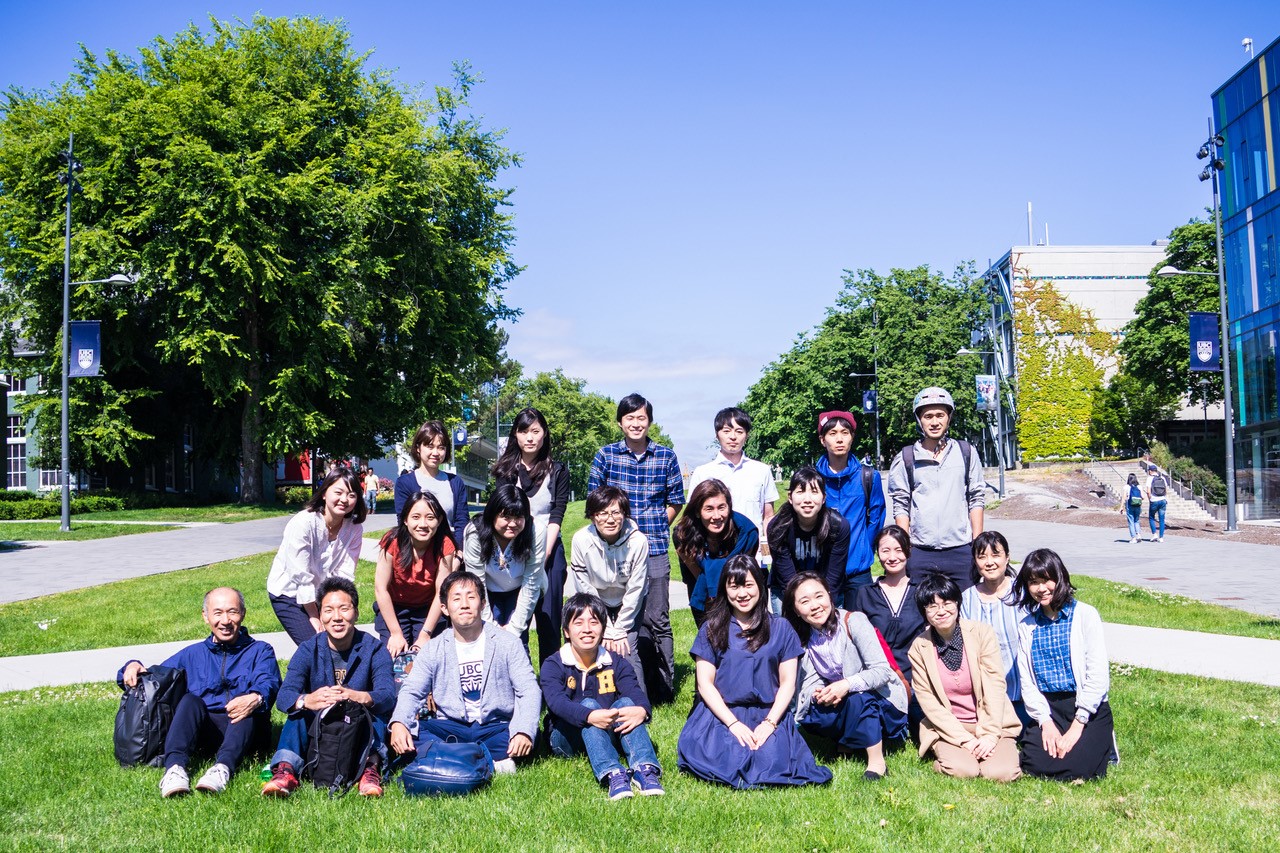
LLED is pleased to host 22 secondary-school English-language teachers from Tokyo Metropolitan Board of Education for a ten-week professional development program.
In collaboration with English Language Institute at UBC, this program is constructed to meet the specific learning objectives set out by the Tokyo Metropolitan Board of Education for teachers of the English language. Course choices were selected to deepen teachers’ understanding and capacity with English language instructional approaches, to provide teachers with the means to improve their professional practice, and to provide ample opportunities for teachers to advance their English proficiency in a supportive environment. Participants will have opportunities to apply their learning in practicum situations.
 LLED is extremely proud of colleague Dr. Marianne McTavish, who has been named Associate Dean of Teacher Education. We will miss her deep influence on students through her LLED teaching, but we will all benefit from her leadership in the TEO.
I know everyone in LLED joins me in offering warm congratulations to Marianne!
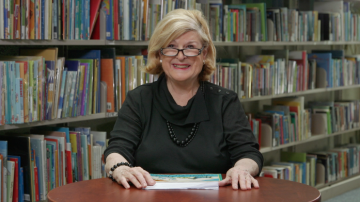 Congratulations to our wonderful colleague, Kathie Shoemaker, for winning the 2018 Alumni UBC Faculty Community Service Award for “significant community service in areas other than teaching and research.”
Brava, Kathie, and so well deserved!

The Faculty’s Office of Research in Education (ORE) is managing a joint ORE-SPARC peer review program for the October 2018 SSHRC Insight Grants competition. Interested applicants should email both Robert Olaj in the ORE and Danica Kell at SPARC by noon Monday August 6th to confirm participation. Upon alerting us of your interest you’ll receive a one page form on which you’ll be asked to provide information that will assist us in identifying appropriate peer reviewers at UBC who will review and provide feedback on your application.
Additional important deadlines for the Insight Grants peer review program:
August 13 Noon: email Robert Olaj and Danica Kell your registration form and one-page application Summary
August 17 Noon: Email full proposal (system generated PDF and Word docs) to Robert Olaj and Danica Kell
August 31: Receive peer reviewer feedback
Deadlines
August 15: Voluntary internal review. For feedback on your proposal, email the system-generated PDF of your application, as well as all Word attachments, to Robert Olaj in the Faculty of Education’s Office of Research in Education (ORE).
September 4, 10:AM: Faculty-level signature. Email your full PDF application and completed UBC RPIF to Robert Olaj in the Faculty of Education’s Office of Research in Education (ORE). The RPIF will be returned to you to submit, along with your application, to UBC ORS.
September 4, 4:00 PM: UBC ORS deadline. Email your application and your completed RPIF to Donna Lei
September 6: SSHRC national deadline.
Indigenous Research Capacity and Reconciliation—Connection Grants support interdisciplinary events and outreach activities geared toward short-term, targeted knowledge mobilization initiatives to contribute to the CRCC-prioritized national dialogue. These events and activities represent opportunities to engage and exchange knowledge on successful ways of conducting Indigenous research that are transformative and contribute to reconciliation, including holistic, interdisciplinary and distinctions-based approaches.
Note: The leadership and governance of proposed projects must involve the participation of First Nations, Métis or Inuit communities.
This call for proposals affirms the important, holistic and interdisciplinary contributions to human knowledge that Indigenous knowledge systems make. Furthermore, the call respects Indigenous knowledge systems, including ontologies, epistemologies and methodologies, as important avenues for exploring the contours of Indigenous knowledge, supporting Indigenous research paradigms, contributing to interdisciplinary collaboration and extending the boundaries of knowledge in western research paradigms. As such, applicants are encouraged to submit projects that are holistic and interdisciplinary, and that reflect the full range of collaboration across disciplines and subject areas pertaining to the social sciences and humanities; natural sciences and engineering; and health and wellness.
The participation of Indigenous Elders and Indigenous knowledge-holders and recognition of their contributions and the observance of knowledge-specific protocols is encouraged.
This funding will support community gatherings, workshops, or other events or outreach activities that will mobilize existing knowledge, facilitate dialogue and knowledge sharing, and result in the preparation of a position paper. The position papers will be shared at a national dialogue event scheduled for March 2019 to develop, in partnership with Indigenous communities, a strategic plan for an interdisciplinary Indigenous research and research training model that contributes to reconciliation with First Nations, Métis and Inuit.
This funding opportunity is guided by themes that have emerged from ongoing engagement with First Nations, Métis and Inuit partners and the federal research funding agencies (SSHRC, NSERC and CIHR), and will help to frame the strategic plan. These themes focus on areas where the granting agencies can contribute to strengthening the capacity of First Nations, Métis and Inuit communities to conduct research and partner with the broader research community, and the capacity of the broader research community to engage respectfully with Indigenous knowledge.
Applicants are encouraged to organize events and outreach activities that address one or more of the following interrelated themes:
Additional themes relevant to Indigenous research that may inform the development of the strategic plan are welcome.

Neville’s Cafe in the Neville Scarfe Building will re-open for the summer on Tuesday, July 3. Details:
Summer Term 2 Schedule:
Tuesday, July 3 – Friday, August 10
Monday – Friday, 7:30am – 2:30pm
Today is a great day for the Faculty of Education at UBC. After extensive consultations over a four-year period with UBC faculty, staff, students and partners of the Vancouver and Okanagan Faculties of Education, a decision has been made by the UBC Board of Governors to merge the university’s two Faculties of Education, and to create a new Okanagan School of Education, effective July 1, 2018.
This merger not only creates new ways for our faculties to interact and collaborate with each other, but also introduces the new UBC Okanagan School of Education.
This new opportunity aims to optimize resources and to create stronger connections between faculties across both campuses, building on our proven excellence in educational research and program delivery.
As well, our ability to serve the educational and professional development of both the students and alumni will be strengthened, with more resources to help provide greater access for teaching candidate practicum locations province-wide, and an even wider pool of faculty to consult on programs and thesis committee membership.
The Faculty of Education would like to take this opportunity to say thank you to everyone who was involved in this collaboration and welcome the new Okanagan School of Education.
| The B.Ed. degree offered by Faculty of Education, UBC-V and the Faculty of Education, UBC-O are entirely different degrees in terms of length of program and degree requirements. This difference in the B.Ed. degrees is an asset and there is no plan to streamline the two B.Eds. into one B.Ed. degree program. |
| It is possible that the merger may provide greater access for teacher candidates in UBC-V to rural practicum locations and likewise, greater access for teacher candidates in UBC-O to urban and suburban practicum locations.Graduate programs at UBC-O will remain administratively unchanged. Masters and doctoral students on both campuses will have access to a larger pool of faculty to consult about possible program and/or thesis committee membership. |
| No. The programs will not change. Every program will proceed as unique offerings to prospective and current students. The merger of the UBC Faculty of Education Vancouver and UBC Faculty of Education Okanagan will not change the number, size, requirements or tuition fees of the programs offered either in Vancouver or in the Okanagan. |
| No. The degree-granting institution nor program you from which you will graduate will not change. |
| No. Each program will continue to operate in its current state, providing the same opportunities to students for practicum placement. |
BRIDGING THE RURAL DIVIDE: AN EXPLORATORY STUDY OF A MEDICAL SCHOOL’S RURAL APPLICANTS
Supervisor(s): Dr. Lesley Andres, Professor, Department of Educational Studies, UBC; Dr. Kevin Eva, Professor and Director of Educational Research and Scholarship, Department of Medicine, UBC; Dr. Pam Ratner, Vice-Provost and Associate Vice-President, Enrolment and Academic Facilities, Office of the Vice-President Academic, UBC
June 18, 2018 | 1PM | Ponderosa Commons Oak House, Room 1001
It is widely recognized that rural students are underrepresented in medical schools in Canada and many other countries. Some have argued that this underrepresentation stems from admissions selection biases. This study explores the relationship between the location of high school of graduation and applicant demographics, performance on several admissions measures, and incorporates a comparison of rural and non-rural applicant autobiographical submissions. For this study I allocated 1963 UBC medical school applicants from the 2014-15 application cycle into three categories (rural, regional and urban). Three primarily analyses were conducted: a comparison of demographic characteristics (age, gender, highest level of education earned at time of application, Aboriginal identity, and BC residency) across the applicant subgroups, a univariate and multivariate statistical analysis reviewing the relationship between location of high school of graduation and measures of performance in the admissions process, and a quantitative content analysis that compared rural, regional, and urban applicant non-academic and employment history experiences. Results suggest that subtle differences existed across the applicant subgroups. Primarily, rural applicants were more likely to be female, to identify as an Aboriginal person, to perform more poorly on the Medical College Admissions Test (MCAT), to work, and to mention employment in trades and forestry related professions than their non-rural peers. These differences, however, were unrelated to the rate at which applicants from the different subgroups advanced through the various stages of the admissions process. Because medical schools struggle to balance the goals and values of their programs with the metrics used to evaluate these traits and characteristics, results reinforce the importance of admissions policies designed to evaluate candidates in a background-appropriate manner so that a diversity of applicants, including those from rural areas, can adequately demonstrate their readiness for a career in medicine.

Deadline: June 30, 2018
Nomination Form
Do you know someone who has made a positive, long-lasting impact on your school community. Then nominate them for one of the Premier’s Awards for Excellence in Education.
The Premier’s Awards for Excellence in Education were created to recognize the enormous contributions of B.C.’s exceptional teachers, administrators and support staff that are vital to the cultural, economic and social well-being of the province. The Premier’s Awards provide students, parents, teachers and other members of the community with an opportunity to celebrate those who make a real difference in B.C. schools.
The Awards are presented annually to exceptional education professionals in British Columbia’s school system working within either the public, independent, First Nations, or offshore school systems.
Learn more about the nomination categories or the nomination process.


